
A reflection on Human Transit: How Clearer Thinking About Public Transit Can Enrich Our Communities and Our Lives by Jarrett Walker
One of the most common arguments against dedicated bus lanes is surprisingly simple:
“Why reserve an entire lane for buses when it’s empty most of the time?!”
If you’ve ever been stuck in traffic while the bus lane beside you appears almost deserted—with only an occasional bus speeding past—it’s easy to feel that valuable road space is being wasted.
The problem is that our eyes are misleading us.
Why Do Bus Lanes Look “Empty”?
1. A Visual Illusion
A bus lane is designed to keep buses moving.
Because buses don’t get trapped in congestion, they travel much faster than surrounding traffic. To drivers sitting in a traffic jam, buses simply flash by and disappear.
Cars, on the other hand, spend much more time occupying your field of view because they’re crawling along or completely stopped.
Ironically, the less congestion a lane has, the “emptier” it appears.
2. Vehicles Are Not People
Another common mistake is judging road performance by counting vehicles instead of people.
A single bus may carry 50 passengers.
Those same 50 people would require roughly 30–40 private cars, depending on average vehicle occupancy.
When you see one bus, you’re actually seeing the equivalent of dozens of cars.
Your eyes count one vehicle.
The road is moving fifty people.
3. A “Full” Bus Lane Is Actually Bad News
Many people assume an effective lane should always look busy.
For bus lanes, the opposite is true.
If buses are bumper-to-bumper, the lane is congested.
That means the system is no longer operating efficiently.
A successful bus lane should have relatively few vehicles while moving a large number of passengers.
Its goal is not to maximize the number of buses.
Its goal is to maximize the number of people transported.
Moving People, Not Cars
When discussing congestion, we often focus on how to move more vehicles.
But transportation isn’t about moving cars.
It’s about moving people.
A simple calculation illustrates the difference.
A general traffic lane typically carries:
- 2,000 cars per hour
- 1.2 people per car
That’s approximately 2,400 people per hour.
Now consider a dedicated bus lane.
If it carries:
- 60 buses per hour
- 50 passengers per bus
It transports 3,000 people per hour.
The bus lane contains far fewer vehicles, yet it moves significantly more people using exactly the same amount of road space.
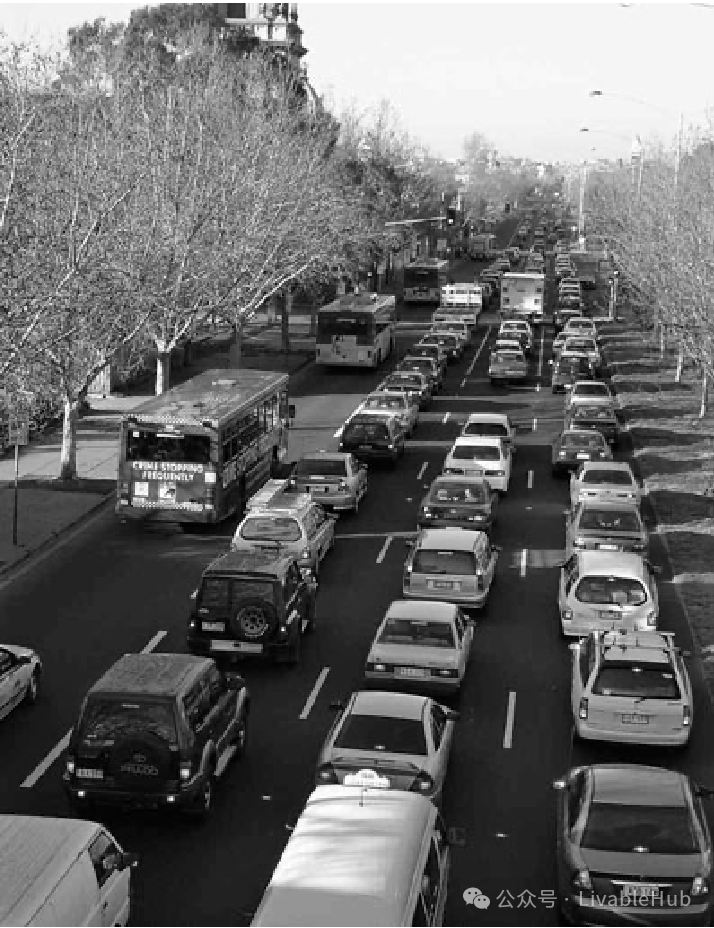
credit to 《human transit》
A Real-World Example from Melbourne
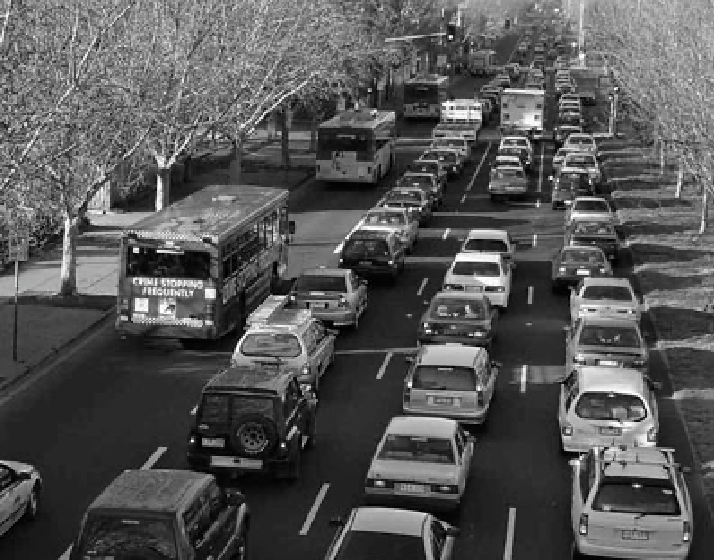
Jarrett Walker cites an excellent example from Hoddle Street in Melbourne, Australia.
During the afternoon peak, one dedicated bus lane carried more passengers than the three adjacent traffic lanes combined.
On freeways, this illusion becomes even stronger.
When buses cruise past stationary traffic at normal operating speed, they almost disappear from the perspective of drivers trapped in congestion.
An efficient bus lane often looks empty precisely because it is working.
So What Is the Real Waste?
The real waste isn’t an apparently empty bus lane.
The real waste is:
- Thousands of cars occupying valuable urban road space while carrying only one person each.
- Dedicating scarce street capacity to the least space-efficient mode of transportation.
Once we evaluate streets by people moved instead of vehicles counted, dedicated bus lanes stop looking like wasted space.
Instead, they become one of the smartest investments a city can make.
Don’t Let Your Eyes Fool You
An “empty” bus lane is often carrying far more people than a congested traffic lane beside it.
It looks empty.
But it’s actually full of passengers.
The lane is serving people—not vehicles.
Understanding this simple distinction changes the entire conversation about urban mobility.
A truly livable city isn’t one where every lane is packed with cars.
It’s one where people can travel efficiently, reliably, and comfortably—regardless of how they choose to move.
Three Questions from Human Transit
Jarrett Walker concludes with three thought-provoking questions that every city should ask:
- What proportion of people on this street are traveling by bus rather than by car?
Should road space be allocated according to the number of people being moved rather than the number of vehicles? - How much faster would buses become with dedicated lanes?
How would that increase the area people can reach within, say, a 30-minute journey? - If public transport became significantly faster and more reliable, would more people choose it?
And perhaps more importantly: Would you?
Reference:
Walker, J. (2011). Human Transit: How Clearer Thinking About Public Transit Can Enrich Our Communities and Our Lives.